|
It is commonly said that the Parker 51 Aerometric is virtually foolproof, and that most of them found "in the wild" can be put back into use after nothing more than a good flushing with cool water. Yet many unrestored Aerometric-filling 51s need more: at minimum, disassembly and a thorough cleaning, and often, replacement of the breather tube.
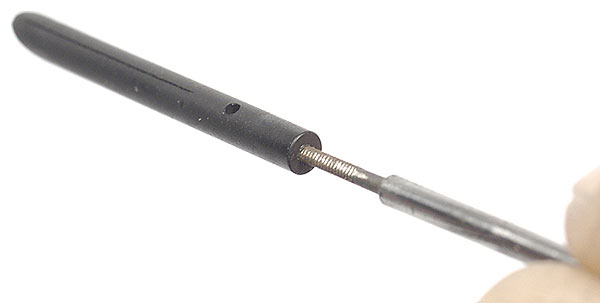
While many old Aerometric 51s will suck up water (or ink) when their sacs are squeezed, that does not mean they will fill completely or write properly. The fine-finned collector is superbly adapted to wicking up excess ink by capillary action, but as a result can be very difficult to get completely free of old, hardened ink encrustations. The sterling silver breather tube is often clogged or badly corroded (the examples above are typical), allowing the sac to fill to only a fraction of its capacity and shedding bits that do nothing to improve the reliability of ink flow.
Removal of the remains of an old breather tube can be a chore. The best method we have found is to thread a miniature tap (.90 UNM or 000-120) into the stub of the tube left in the feed, then apply heat until the stub can be wiggled out. The hard rubber of the feed may end up slightly distorted from the heat and pressure, but will return to its original dimensions upon reapplication of heat without pressure.
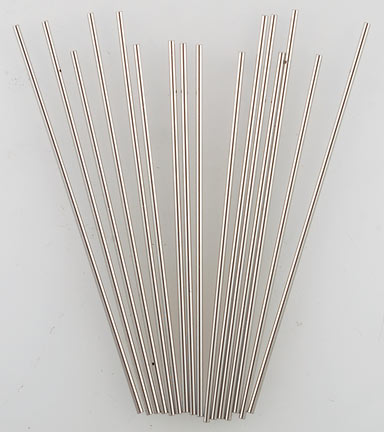
Original breather tubes are hard to come by. Fortunately, we have had replacement tubes manufactured to the correct Parker-specified dimensions in stainless steel. Costs have been kept down by production in quantity. Note that original Aerometric breather tubes have a small hole drilled through one side about 6 mm down from where the tube enters the feed. This hole is carefully sized and placed so as to equalize internal and external air pressure, preventing the expulsion of ink during flight. Our breather tubes retain this feature, as shown below.
|